Our weekly strips from Kupperman (who notes that "Moon 69" will resume next week) & Weissman, plus two weeks worth of links to other strips from around the web:
• "The Strangest Story You Ever Heard in Your Life" wraps up at Splog!, the Sergio Ponchione Lost Objects Gallery blog, plus illustrations at Mondobliquo
• Review/Interview:ESPN.com's Jim Caple looks at 21: The Story of Roberto Clemente — "Santiago has a stunning, cinematic style, and 21 is filled with gorgeous illustrations that capture the power and grace of Clemente as no standard book of black and white type ever has or could. […] By appealing to all ages, 21 is a wonderful way to introduce younger readers to one of baseball's most important players and a great way to introduce older readers to the story-telling power and sophistication of graphic novels." — and talks to its creator, Wilfred Santiago: "Clemente's appeal is exactly what you see in 21. He had many sides but the story of a young person from a humble background going against the odds, overcoming obstacles and challenges, the struggles, anger, injustice, the loneliness, while not losing himself in the process, was compelling. On top of it, he did not conform to being an average athlete or human being but excelling as both. And he did it during one of the most volatile times in America. This is a story that spoke to me, and I couldn't pass. I also got to dip into baseball; it was a great experience dissecting the sport."
• Review: "While there was clearly a lot on his mind, Trondheim is still first and foremost a gag man. He imbues every page with his dry wit, creating an authorial voice that allows him to get away with all sorts of slapstick and nonsense (without seeming too silly), while also allowing him to write about personal and serious matters (without seeming too ponderous). In later years, Trondheim would return to autobio comics as a way to revive his interest in drawing, but he’s truly at the height of his powers in Approximate Continuum Comics." – Rob Clough, The Comics Journal
• Plugs: At Comic Book Resources, Alex Dueben's report from last weekend's MoCCA Festival includes praise for Peter Bagge & Gilbert Hernandez's Yeah! ("The book isn’t on sale yet, but this should be in demand by anyone who like all-ages comics and those who, when they read that it features a section penciled by Gilbert and inked by Jaime, know they need to own it") and Leslie Stein's Eye of the Majestic Creature ("charming and fabulous") as well as mentions of some of our other debuts
• Renee French custom-painted this Dylan Sprouse vinyl figure; plus the usual drawings etc. at her blog; plus we like this photo on Sprouse's website for obvious reasons
• "The Strangest Story You Ever Heard in Your Life" continues at Splog!, the Sergio Ponchione Lost Objects Gallery blog, plus an illustration at Mondobliquo
We're thrilled to present the Fantagraphics guide to the 2011 MoCCA Fest, happening this weekend Saturday, April 9th and Sunday, April 10th at the Lexington Avenue Armory in New York City! Print this out and use it as your shopping checklist and your weekend schedule!
First off, take a look at all the amazing new releases that we will be debuting at the show! Many of these books won't be in stores for several more months, and copies are limited, so make our table your first stop, or risk missing out!
Secondly, check out our jam-packed schedule of awesome authors who will be signing at the Fantagraphics table over the weekend. Not only will they be signing our books, but several of them will be bringing previews of works-in-progress!
update: George Chieffet will be unable to join us on Sunday, but John Kerschbaum has been added to the 1:30 pm slot that day!
another update: Tim Kreider will be joining us on Saturday afternoon at 2:30 pm before his panel at 4:30 pm!
All this and more awaits you at the Fantagraphics booth, located at #J1, J2, K1, K2.
And finally, get a gander at all these great panels! If you haven't already heard from The Daily Cross Hatch, they've added a second room this year, and they'll be doing more one-on-one conversations like the ones with Gahan Wilson and Peter Bagge listed below! You won't want to miss it!
Saturday, April 9th
11:30 am // Teaching Comics:Jessica Abel joins fellow panelists Bill Kartalopoulos and Tom Hart in a discussion from reading for content/visuals, to teaching how to “read” their visual rhetoric, to thinking about how to tell a story visually, what makes comics worth teaching? (Room A)
1:30 pm // Building a Book, From Start to Finish: Mark Newgarden moderates a panel with Stephen DeStefano (as well as Ben Katchor and Lauren Redniss), with an exploration of the blood, sweat, and tears that go into making a book. (Room A)
1:30 pm // Gahan Wilson: Playboy and Beyond: We explore the long, storied career of satirist Gahan Wilson. (Room B)
2:30 pm // Volunteer of the Year: Peter Kuper will present Al Jaffee with the Klein Award! (Room A)
2:30 pm // Dash Shaw and Brecht Evens in Conversation: Dash Shaw and Brecht Evens are among the most prodigious and prolific young artists working in comics today. Both began publishing ambitious work while still in school, and both have since gained notice for their lush, inventive, and thoughtful comics. (Room B)
4:30 pm // The State of Editorial Cartooning: Brian Heater presents a panel with Tim Kreider (along with Ruben Bolling and Ted Rall) on the trials and tribulations of creating political cartoons in 2011. (Room A)
5:30 pm // MoCCA Presents the Cross Hatch Carousel: Cartoonists and voice actors perform live comics readings, featuring our own Michael Kupperman and Ted Stearn, as well as Jeffrey Lewis, R. Sikoryak, Kate Beaton, Lisa Hanawalt, Julie Klausner, and more. (Room A)
Sunday, April 10th
12:30 pm // Almost True: Calvin Reid leads a discussion on where autobiography and fiction collide with Gabrielle Bell and Leslie Stein (and Joe Ollmann and Pascal Girard). (Room A)
1:30 pm // Peter Bagge: A History of Hate: Brian Heater spotlights Peter Bagge, in a one-on-one conversation with one of alternative comics’ most influential and enduring voices. (Room B)
1:30 pm // The Enterprising Will Eisner: Charles Brownstein leads a panel with Jules Feiffer, as well as Denis Kitchen and Paul Levitz. Come learn about who Will Eisner was as an entrepreneuring artist in a time when New York was the center of the commercial art universe, and how his art was shaped by that environment. (Room A)
3:30 pm // Ink Panthers Live: The popular podcast live, with special guests, like John Kerschbaum. (Room B)
Lewis Trondheim is posting new pages from his forthcoming chronicle of his time with L'Association. (Of course, there's plenty of behind-the-scenes scoop from the French comics scene in the coming-soon Approximate Continuum Comics as well.)
[In this installment of our series of Editors Notes, Kim Thompson interviews himself (in a format he's dubbed "AutoChat") about Approximate Continuum Comics by Lewis Trondheim, now available to pre-order from us and coming soon to a comics shop near you. – Ed.]
Now this is the material that was serialized in The Nimrod, right?
Yes and no. The Nimrod #1, 6, and 7 featured the first three installments (out of six). So if you have all the Nimrods, sorry, you'll be buying half of it all over again. But the translation's been reworked and it's been re-lettered from scratch.
Why re-letter? I thought whoever did the comics did a really nice job.
I agree, but Jeremy Eaton's no longer interested in lettering, which means that the second half would've looked different from the first half. Also, in the intervening years, someone created a fantastic Trondheim font. And re-lettering allowed me to tighten up my translation. Turns out I've gotten better in the intervening years, I look at the Nimrod version and go "I can do better than that."
Is that the Trondheim font you used for his MOME story? That is a good font.
It's such a good font that the Eisner Awards jury nominated that story for "Best Lettering," which amused me.
Call me old school but I feel translations should be hand-lettered.
The problem is, if you hand letter translations you lose the infinite-tweaking capability that font lettering gives you. I tweak my translations endlessly, and if I were to do that with a hand-letterer every book would cost us ten thousand dollars to letter. And of course font lettering is far, far cheaper even setting aside my own undisciplined idiosyncracies. But I also think we've tipped over to the point where in many cases the font lettering actually looks better than the hand lettering, partly because it's in the artist's hand, partly because even the best letterer tends to tense up when trying to copy-fit, particularly when lettering those artists who in the original did their lettering and then drew the balloons around them to fit, like Trondheim and Tardi. The hand-lettered chapters of "It Was the War of the Trenches" in Raw and Drawn and Quarterly were done about as well as you could imagine, and I miss the irregularities of hand lettering that font lettering eliminates, but ultimately I think our font-lettered version is better.
One exception: Céline Merrien, who letters our Mahler translations for MOME and will letter our next Mahler project (not announced yet, you heard it here first), can do utterly flawless impressions of pretty much anybody and make it work so it looks like the original. But she's superhuman (and not cheap). If it wasn't for the flexibility/cheapness issues above, I'd hire her to re-letter every foreign book we do... I mean, except for the ones that were font-lettered to begin with, like King of the Flies and the Mattotti stuff.
So, getting away from the lettering nerd-talk, this is all autobiographical comics from the 1990s, right?
Right. Although as Lewis explains in his endnotes, it almost happened by accident. He was writing and drawing a comic in the U.S. "pamphlet" format which was intended to be a combination of fiction and little autobio vignettes, and the latter completely took over. The vogue for autobio comics didn't hit France nearly as hard as it hit the U.S., but Lewis is one of the few who really got into it — and still is, in his "Little Nothings" series. (Others would be Jean-Christophe Menu, Fabrice Néaud, and Guy Delisle.) What's funny is that Lewis is in person quite shy, but utterly willing to expose himself in his comics. He writes with extreme candor about his shyness!
Any juicy gossip about other cartoonists?
No. Several other cartoonists figure prominently, particularly his studio mates at the time (Émile Bravo, Charles Berbérian), and his L'Association compadres (David B., Jean-Christophe Menu, Killoffer), but no real dirt - unless it comes as a surprise to you that Menu is quite the lush! Mostly just mildly embarrassing anecdotes about things like Émile Bravo's annoying humming habits, and Lewis (who hits himself 100 times harder than he hits anyone else) lets the cartoonists set the record straight in a "Rebuttals" section at the end. Oh, there's a wordless cameo by Moebius, too, watching Lewis nearly throwing up.
Why did you stop publishing Trondheim? Fantagraphics was out front with both The Nimrod and the McConey books, then you just quit.
Because both series tanked! American readers rejected the European album format of McConey, and The Nimrod was caught in the death spiral of alternative comic books. Tom Spurgeon wrote a very nice little essay a few weeks ago about how if a great book like The Nimrod couldn't work that signaled the doom of the "pamphlet" form. On the other hand we'd kind of run out of Trondheim material that worked in that format, all we had left was to run more chapters of Approximate and that sort of seemed to be cheating; I'd started to resent the use of the pamphlets as just being double-dipping pre-graphic-novel content providers, and I'm sort of pleased two thirds of the Nimrod material did not fit that definition. (It does also mean that Trondheim fans who missed the now sold out issues are shit out of luck.)
Anyway, NBM and First Second have been doing a pretty stellar job of cranking out Trondheim stuff. NBM has been putting out three Trondheim books a year for a while, and when you consider their Dungeon books collect two of the French editions, the amount of Trondheim albums available in the U.S. has got to be pushing 40. Which is only about a third of his output, but still.
That said, I would like to get back into the Trondheim business and actually plan to start putting out two of Lewis's books a year.
Which material?
That would be telling. It would make sense to put out La Mouche as a "pendant" to Approximate Continuum, of course. But wait and see. No matter what, I think he can still write and draw them faster than Terry Nantier and I combined can translate them.
Is Approximate Continuum some of your favorite Trondheim work?
Yes. Why else would I pick that since he's got a zillion other books to choose from? Check.
Because you already had it half translated, it was easier doing a new one from scratch, and you're lazy. Check.
Good point. But back then I picked it because it was some of my favorite Trondheim work too. Checkmate.
Well played, sir! And you're right, it is a great comic.
160-page black & white 6.75" x 10.25" softcover • $18.99 ISBN: 978-1-60699-410-8
Ships in: May 2011 (subject to change) — Pre-Order Now
One of the very first autobiographical graphic novels to come from France, Lewis Trondheim’s Approximate Continuum Comics set the standard for the honest, often hilarious chronicling of a cartoonist’s life. Trondheim’s typically graceful, confident cartooning shows him wrestling with his own demons (sometimes, in dream sequences, literally) and an often malevolent world, while trying to maintain his rising career as one of Europe’s most beloved cartoonists.
Approximate Continuum finally brings American readers the first portion of the “Trondheim autobio trilogy” that also comprises the Eisner-nominated “At Loose Ends” meditation serialized in Mome and the “Little Nothings” series of short slice-of-life stories.
This volume contains the first three chapters serialized in The Nimrod comic book (praised as "A rewarding, pleasurable and entertaining read from a fine talent... well worth the cover price" by The Comics Reporter), the last three (never-before-translated) chapters, and a hilarious “rebuttal” section in which Trondheim’s family and cartoonist friends (including Epileptic creator David B. and Trondheim’s mom) dispute (or ruefully agree with) Trondheim’s depictions.
Download an EXCLUSIVE 14-page PDF excerpt (903 KB).
Today's Online Commentary & Diversions includes links related to all of our artists with the initials L.M.:
• List:Sequential Tart's Rebecca Buchanan names Linda Medley's Castle Waiting one of "My Fourteen Favorite Comics About Love"
• Review: "Tim Kreider is a great caricaturist, as his latest collection of cartoons, Twilight of the Assholes, attests. He has a real knack for portraying the unsightly physical traits of modern Americans– the rolls of fat, the paunchy stomachs, the jowls, flabby arms and chinless faces — that make up more of the current populace than we’d care to admit (myself included). Plus, he’s got a nice, razor-sharp wit that really cuts to the absurdity of a particular stance or issue, and he isn’t afraid to get nasty or break a taboo to make his point, which can be refreshing." – Chris Mautner, Robot 6
• Review: "Cleverly constructed, laconically laid out in the classic nine-panel-grid picture structure and rendered in comfortingly mundane style a la Charles Burns, King of the Flies is a landmark in metafictional mystery tales. [...R]eaders will have to wait for the concluding book to discover how this stunning, mesmerising amalgam of Twin Peaks, Desert Palms, Peyton Place, The Omen and Blue Velvet plays out. A stylish and magical portmanteau saga of a community cursed with an excess of human frailty – lust, rage, greed, despair and especially shallow selfishness – this is a story that will surprise, compel, distress and haunt anybody with even half an imagination. Darkly addictive, casually violent and graphically sexual, King of the Flies is 'adults only' and well worth waiting until you’re 18 for." – Win Wiacek, Now Read This!
• Review: "This is a story about purpose, inertia, the road blocks we throw up for ourselves and the ways in which we are forced to interact with a demanding and frequently demeaning world. This book feels intimate because unlike his past work, Sammy the Mouse has an immediacy to it that’s quite different in tone from his earlier, more distant (but no less visceral) comics. [...] Sally’s comics have an ugly physical quality to them that I’ve always liked, but the two-color process he uses here pushes the ugly/beautiful tension even further. [...] The care and thought that Sally put into adapting his comic into the Ignatz format shows on every page and makes the story resonate all the more." – Rob Clough, The Comics Journal
• Review: "It’s hard to decide which Ignatz book is the best-looking purely from an aesthetic standpoint, but Leila Marzocchi’s Niger has to be in consideration. It’s another series that’s dominated by two tones (in this case, rust red and a chalky blue) that’s remarkable to behold simply in terms of its mark-making. There’s a lushness to this series, in the way Marzocchi uses a scratchy technique that makes her figures and backgrounds look as though they were less drawn than constructed with dense webs of color. Her figures are fabulously exaggerated, all curves and bulbous noses. Everyone is larger than life, creating a sort of mysterious and slightly dark fairy tale atmosphere for this story. [...] It’s an easy comic to follow and probably the friendliest to non-comics readers in the Ignatz line. While its ideas are original, its familiar feel creates a certain immediate comfort level for the reader as they delve into a strange and beautiful world. It’s as though Niger is a favorite old fairy tale whose memory is just out of reach." – Rob Clough, The Comics Journal
• Review: "Instead of writing about the [Prince Valiant] series as a whole (or at least, those volumes I have read), I decided to do another one-page criticism. After much debate with myself I selected the page... dated December 1, 1940, appearing at the end of volume 2. In some respects this is a typical Hal Foster page, but in many ways it is not, which is partially why I chose it." – Derik Badman, The Panelists
• Plug: "ROY CRANE Mania! Just got my copy of Buz Sawyer: War in the Pacific, this and the Captain Easy volumes are long overdue. Thrilling stuff! Roy Crane is one of the unsung greats! Thrilling, charming, infectious masterful storytelling. Probably in my top five favorite cartoonists. Roy Crane drew some of the most subtly sexy women ever. ...[H]uzzah to Fantagraphics! Okay, I'm insane for Roy Crane. It may look old fashioned at first glance, but trust me, once you dive in you'll eat it up!" – Mike Allred
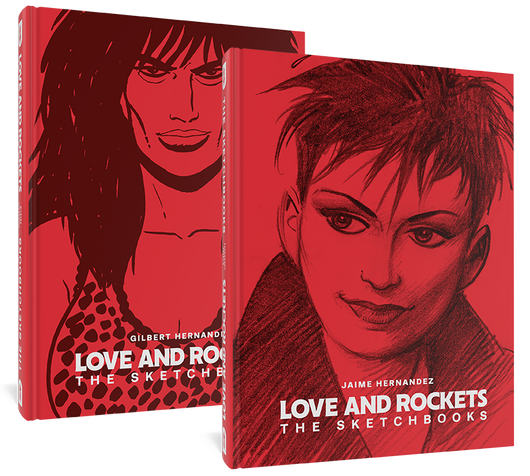
• Plug: "[Love and Rockets: New Stories #3] was as amazing as folks said it was. No knock against Gilbert, but Jaime murdered it this time around, absolutely killed, fired on all cylinders, drowned it in ink. Jeepers, someone give that man a cartooning medal." – Evan Dorkin
• Plug: "I forgot how much I enjoyed reading Carol Tyler's comics when I was tripping over them in various anthologies in the 80's/90's. I stumbled across this book [Late Bloomer] while cleaning up in the basement where all the comics that don't fit anywhere sleep, and was happy to revisit these pieces, as well as material I hadn't read before. The perils of buying a book and putting it aside for too long. Funny, warm, human, honest, occasionally beautiful/heartbreaking 'life' comics." – Evan Dorkin
• Plug: "I love Roy Crane and I'm super-happy [Captain Easy Vol. 1] is in print. Cartoonists and cartoonist-wonks, take heed, there is some beautiful work to be pored over here. ...Crane = Master." – Evan Dorkin
• Plug: "Regular readers of this blog will be aware of the release of Stigmata (Fantagraphics) just a few weeks ago. Featuring expressionist master Lorenzo Mattotti's swirling, cross-hatched pen line as if the story were recounting the fading memory of a dream about a drunk who one day wakes up marked with stigmata. It's an intense and perfectly balanced story, in hard cover with a wonderful Mattotti painting on the cover and it deserves to be a flagship title for any graphic novel collection." – Dave's Comics
• Interview: At The Comics Journal, Ian Burns talks to Shaun Partridge, writer of the Josh Simmons-drawn Mome serial "The White Rhinoceros" (part 1 of 3): "I think fun is the law. You should really enjoy life and laugh. That’s what comedy’s all about. Which is also alchemical, because you’re taking something that is unpleasant and making jokes about it. You know, Dave Chappelle’s a master alchemist. Larry David’s an alchemist."
• Commentary:The Comics Reporter's Tom Spurgeon on Lewis Trondheim's The Nimrod and the purported "death of the alternative comic book"
French and Belgian publishers have taken to promoting their new books with nifty semi-animated "trailers." Here is the trailer for Lewis Trondheim's new series, RALPH AZHAM, coming this March from Dupuis.
I post this to distract you from the fact that I'm a bit behind schedule on finishing the translation for Lewis's APPROXIMATE CONTINUUM COMICS. It's embarrassing that Lewis draws new comics faster than we can translate his old ones.